Guide
How to Clean a Dog's Ears: Safe Steps and How Often
Most dogs need no routine ear cleaning: PDSA advises leaving healthy ears alone. For a waxy ear, speak to your vet first, then use a dog ear cleaner and cotton wool, never a cotton bud. A red, smelly or sore ear needs a vet, not a clean.
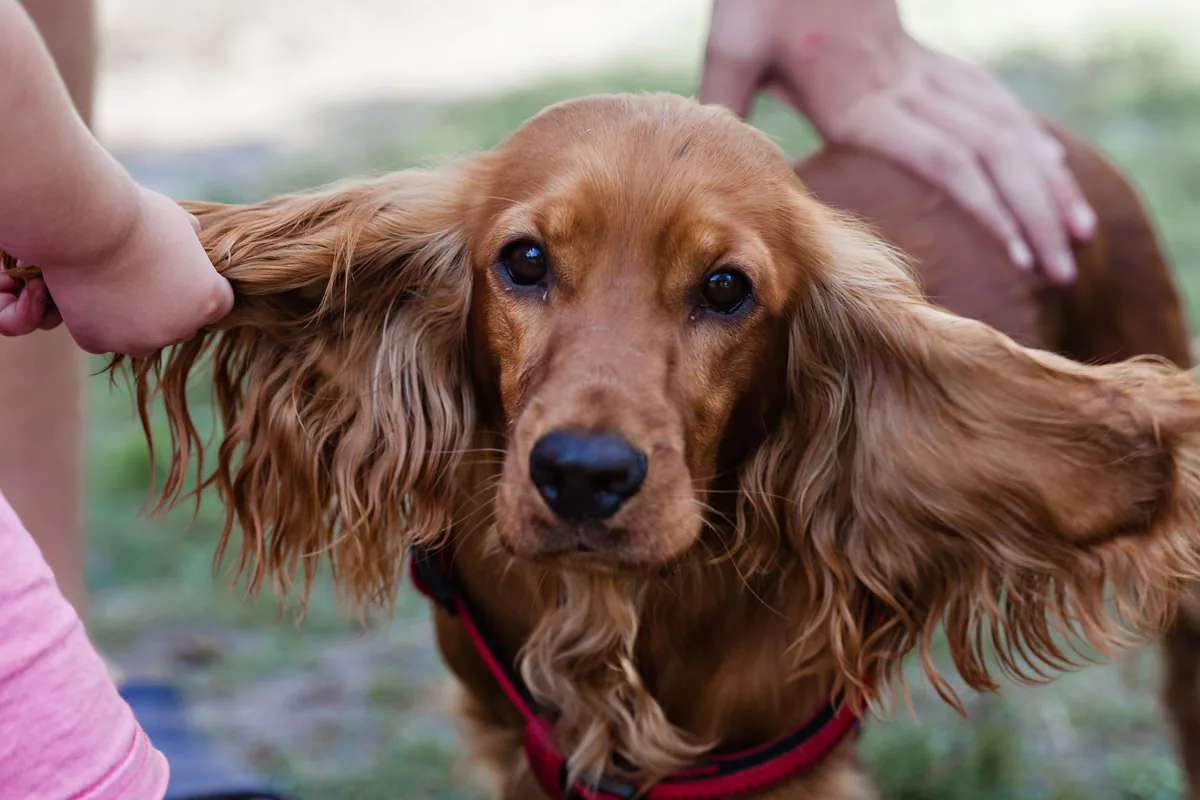
Do dogs need their ears cleaned?
Most do not. PDSA's advice is that most dogs don't need their ears cleaned regularly, and that unless you notice a problem you should leave them alone. What every dog does need is a regular look: lift the flap, check that the skin inside is pale and clean, and sniff. Doing it while you brush means a change gets noticed in days rather than weeks.
Cleaning earns its place for dogs whose ears get very waxy or dirty, or that have had repeated ear infections. For those dogs PDSA says cleaning from time to time may help, but it still advises speaking to your vet before you start, so the vet can check whether the ear needs medicine first. That check matters because an ear that looks only waxy from outside can need treatment before it is cleaned at all.
Which signs mean see a vet rather than clean?
PDSA lists these as signs of an ear problem. Any one of them is a reason to book the vet, not to reach for the cleaner:
- Heat, redness or swelling inside the flap or around the opening
- A bad smell from one or both ears
- Itching, head shaking, or rubbing the face along the floor or furniture
- Flinching, crying or pulling away when the ear is touched
- A head tilt, loss of balance or flickering eyes, which can mean the inner ear is involved
PDSA's guidance is to contact your vet as soon as you notice a problem, because the sooner an ear is treated the better the chance of a quick recovery. A vet looks down the canal with an otoscope; neither an owner nor a groomer can see that far, so neither can tell what is causing the trouble.
How do you clean a dog's ear safely?
Once your vet has said cleaning is right for your dog, the method PDSA describes is simple. Have ready a dog-safe ear cleaner (PDSA says only ever use one made for dogs), cotton wool, gloves and some treats.
- Rest the nozzle of the bottle at the entrance of the ear canal, not down it, and squeeze some cleaner in. PDSA says one big squeeze is usually enough.
- Put the bottle down and gently massage the base of the ear to loosen wax and dirt.
- Let your dog shake its head, and stand back while it does.
- Wipe away the loosened dirt from the entrance and the inside of the flap with cotton wool.
- Give a treat, then do the other ear with fresh cotton wool.
Never use a cotton bud. PDSA warns it can push dirt further into the ear, or burst the eardrum if it goes in too far. The same goes for a finger wrapped in tissue. Clean only what you can see, and stop if the dog shows pain.
How often should you clean a dog's ears?
There is no set schedule. A dog with clean, comfortable ears may never need it, and a dog with waxy ears should be cleaned as often as the vet suggests, no more. Checking is the habit to build, and it suits some dogs more than others. PDSA names the Bichon Frise, Cavalier King Charles Spaniel, Cocker Spaniel, English Springer Spaniel, French Bulldog, Maltese, Newfoundland, Pug and Shar Pei among the breeds more prone to ear disease. Long, heavy ear flaps hold in warmth, and breeds whose canals grow hair, such as poodles, poodle crosses, Shih Tzus and bichons, trap more wax.
| What you see | What to do |
|---|---|
| Pale, clean skin and no smell | Leave the ear alone and keep checking |
| A little wax on the flap | Wipe the flap with cotton wool; ask your vet before using a cleaner |
| Wax that keeps coming back | Ask your vet whether, and how often, to clean |
| Redness, heat, swelling, a smell or pain | See a vet; do not clean the ear first |
| A head tilt or loss of balance | Contact a vet straight away |
What does a groomer do with a dog's ears?
Most full grooms and baths include an ear check and a wipe of the flap and the entrance to the canal at no extra charge. On its own, ear cleaning by a groomer costs £9 to £12, the middle half of 19 published UK prices as of October 2026. A groomer cleans what can be seen and does not treat ears. If an ear looks red or smells, a careful groomer will stop, tell you, and leave it for the vet.
For hairy-eared breeds the groomer will either pluck loose hair from the canal or trim around the opening. Plucking is debated among groomers, and many now pluck only when the hair is causing a problem, so tell the groomer if your vet has a view, and ask which they do before the appointment.
Ears are also the part of a groom many dogs dislike. Get a dog used to having its ears lifted and touched for a few seconds at a time, with a treat, from the first weeks at home; a puppy introduction groom does the same with the dryer and the table. For a dog that already panics, a groomer who works with nervous dogs can keep ear handling short and stop before it turns into a struggle.
Common questions
Can I clean my dog's ears with water or baby wipes?
PDSA advises using only a dog-safe ear cleaner, so leave household products out of the ear. Ask your vet which cleaner suits your dog.
Why does my dog's ear smell?
A bad smell is one of the signs PDSA lists for an ear problem. Book a vet appointment rather than cleaning it, because it may need treatment first.
Do groomers clean dogs' ears?
Yes. Most full grooms and baths include an ear check and wipe, and an ear clean on its own costs £9 to £12, the middle half of 19 published prices (October 2026).
Should I pluck the hair in my dog's ears at home?
No. Whether to pluck at all is debated; ask your vet whether your dog's ears need it, and leave plucking to a groomer if they do.